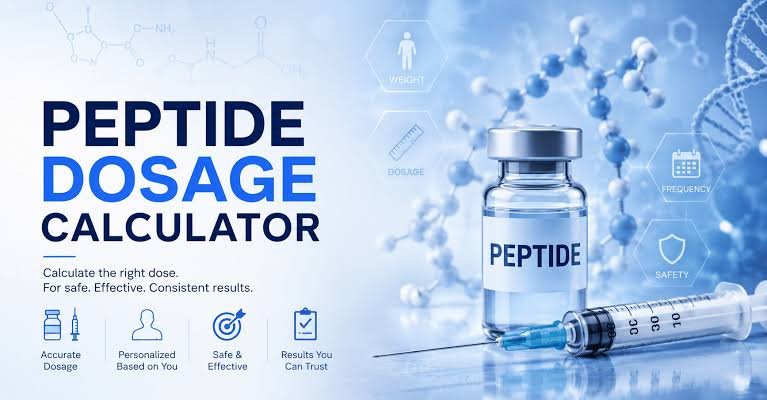
Peptide Calculator: The Easy Way to Calculate Accurate Peptide Dosages
Whether you’re a researcher, healthcare professional, or someone learning about peptide preparation, using a peptide calculator can save time and reduce dosing errors. Peptides are commonly supplied in lyophilized (freeze-dried) powder form and must be reconstituted with bacteriostatic water before use. Calculating the correct concentration and dosage manually can be confusing, especially for beginners.
A peptide calculator simplifies these calculations by providing precise measurements based on the peptide vial strength, the amount of diluent added, and the desired dose. This helps ensure accuracy and consistency every time.
What Is a Peptide Calculator?
A peptide calculator is an online tool designed to determine the correct amount of liquid or units needed after a peptide has been mixed with bacteriostatic water. Instead of relying on manual formulas, users simply enter a few values, and the calculator instantly provides the correct dosage.
Most peptide calculators work with common peptide vial sizes such as 2 mg, 5 mg, 10 mg, or higher and support different syringe measurements, making them useful for a wide variety of peptide preparations.
Why Use a Peptide Calculator?
Preparing peptides incorrectly may lead to inaccurate concentrations, wasted product, or inconsistent dosing. A peptide calculator helps eliminate guesswork and offers several important benefits:
- Provides quick and accurate dosage calculations.
- Reduces the risk of mathematical errors.
- Saves time during peptide preparation.
- Supports different vial strengths and diluent volumes.
- Makes peptide reconstitution easier for beginners and experienced users alike.
Using a calculator also improves confidence when working with peptide solutions by presenting easy-to-understand results.
How Does a Peptide Calculator Work?
A peptide calculator uses three primary pieces of information:
1. Peptide Strength
This is the total amount of peptide contained in the vial, usually expressed in milligrams (mg).
2. Amount of Diluent
Enter the amount of bacteriostatic water added during reconstitution. This determines the final concentration of the solution.
3. Desired Dose
Specify the amount of peptide you want per administration. The calculator converts this into the volume or syringe units required.
Based on these inputs, the calculator determines exactly how much solution corresponds to your selected peptide dose.
Example Calculation
Suppose you have:
- 5 mg peptide vial
- 2 mL bacteriostatic water
- Desired dose: 250 mcg
After entering these values, the peptide calculator determines the exact volume required to obtain a 250 mcg dose. Instead of performing manual conversions between milligrams, micrograms, and milliliters, the calculator completes the process instantly.
This makes peptide preparation much faster and significantly reduces calculation mistakes.
Features of a Good Peptide Calculator
Not all calculators provide the same functionality. A reliable peptide calculator should include features such as:
- Support for multiple peptide vial sizes.
- Flexible bacteriostatic water volumes.
- Automatic conversion between mg and mcg.
- Compatibility with insulin syringe units.
- Mobile-friendly design.
- Fast and accurate calculations.
- Clear, easy-to-read results.
These features make the calculator useful for both beginners and experienced users.
Common Mistakes When Calculating Peptide Dosages
Even experienced users can occasionally make errors during peptide preparation. Some of the most common mistakes include:
- Confusing milligrams (mg) with micrograms (mcg).
- Entering the wrong amount of bacteriostatic water.
- Misreading insulin syringe markings.
- Forgetting to convert units properly.
- Using incorrect vial strength during calculations.
Using a peptide calculator greatly reduces the chance of these common mistakes.
Tips for Accurate Peptide Preparation
To achieve consistent calculations, follow these best practices:
- Double-check the peptide strength listed on the vial.
- Measure bacteriostatic water carefully.
- Use sterile equipment during reconstitution.
- Verify all entered values before calculating.
- Store reconstituted peptides according to manufacturer recommendations.
Accurate preparation begins with accurate calculations, making a peptide calculator an essential tool.
Who Can Benefit from a Peptide Calculator?
A peptide calculator is useful for many individuals involved in peptide handling, including:
- Laboratory researchers.
- Medical professionals.
- Educational institutions.
- Students studying peptide science.
- Individuals learning about peptide reconstitution.
Its simple interface makes complicated dosage calculations much easier to understand.
Frequently Asked Questions
Is a peptide calculator accurate?
Yes. When correct values are entered, a peptide calculator performs accurate mathematical conversions and provides reliable dosage information.
Can beginners use a peptide calculator?
Absolutely. Most calculators are designed with simple input fields and instant results, making them easy for beginners to understand.
Does the calculator replace professional medical advice?
No. A peptide calculator is a mathematical tool designed to assist with dosage calculations. It should not replace guidance from qualified healthcare professionals or laboratory protocols.
Final Thoughts
A peptide calculator is one of the most valuable tools for simplifying peptide dosage calculations. By converting complex mathematical formulas into quick, accurate results, it helps improve consistency, reduce errors, and save time during peptide preparation.
Whether you’re calculating concentrations after reconstitution or determining the correct syringe volume for a desired dose, a reliable peptide calculator makes the process straightforward and efficient. Always verify your inputs carefully and follow appropriate handling, storage, and professional guidance when preparing peptide solutions.